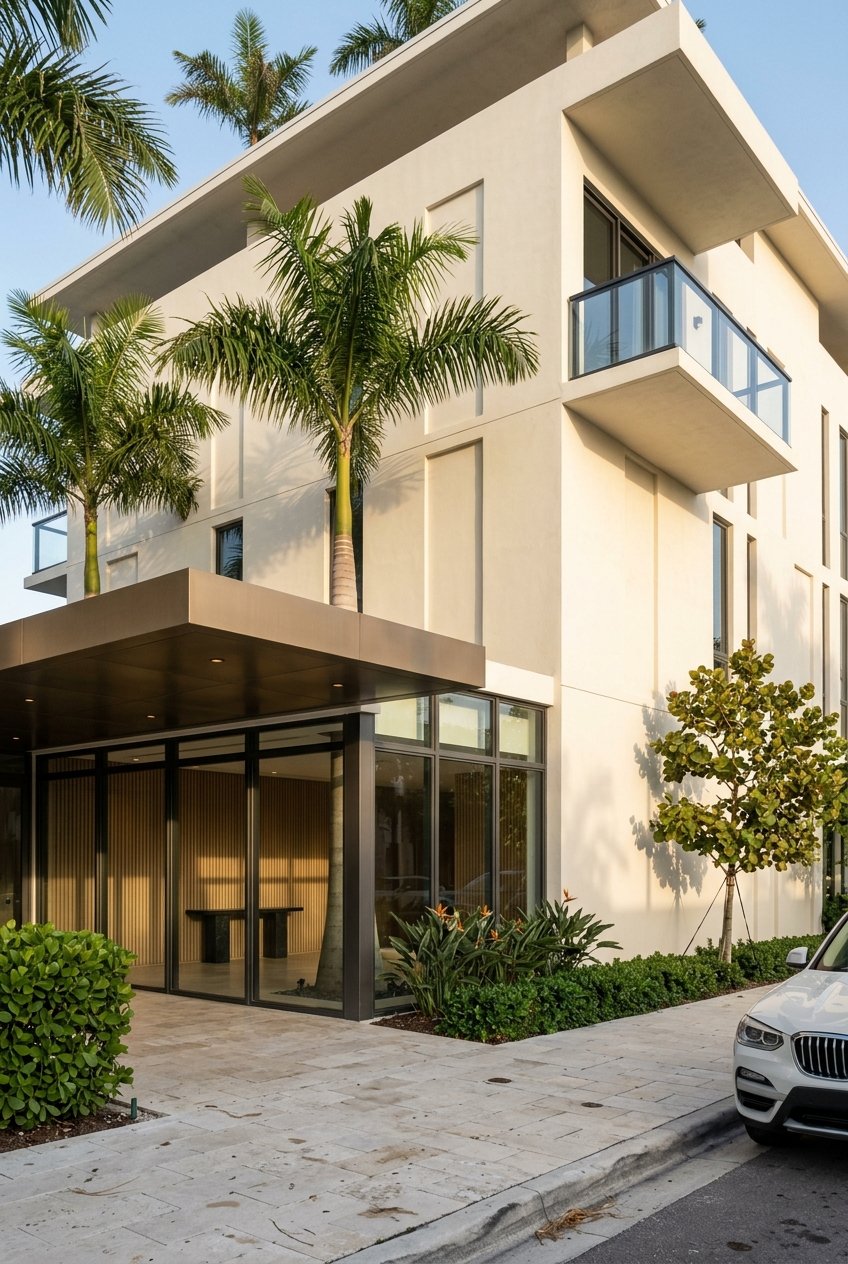
In Town Palm Beach Living With Everyday Luxury
July 16, 2026
July 16, 2026
If you picture Palm Beach as only grand estates and quiet residential streets, the in-town experience may surprise you. This part of the island offers a more connected way to live, where boutiques, dining, services, cultural destinations, and the beach all sit within a compact area. If you want everyday convenience without giving up Palm Beach polish, this guide will help you understand what in-town living really feels like. Let’s dive in.
In-town Palm Beach is best understood as the town-center and Midtown corridor. It includes Worth Avenue, South County Road, Peruvian Avenue, Royal Palm Way, and the Royal Poinciana Way area near the Flagler Memorial Bridge.
According to the Town of Palm Beach comprehensive plan, this is the island’s central commercial and service cluster. Worth Avenue serves as the primary retail street, while nearby corridors support additional shops, restaurants, services, and offices.
That layout matters if you are thinking about daily life, not just a mailing address. In-town Palm Beach places many routine needs and lifestyle amenities close together, which creates a very different rhythm from the island’s more private estate sections.
Luxury in-town is not only about beautiful storefronts or polished façades. It is also about being able to move through your day with less friction.
The area is organized around short trips and concentrated retail nodes. The town’s parking system includes ParkMobile curb zones, nearby lots such as the Apollo Parking Lot on Hibiscus Avenue, and parking at The Esplanade on Worth Avenue.
You will also find time-limited zones on Worth Avenue, South County Road, Peruvian Avenue, Royal Poinciana Way, and parts of the North End. Resident permits can provide two free hours in any ParkMobile zone, which adds convenience, but this is not a free-parking environment.
That balance shapes the in-town lifestyle. You can enjoy a walkable setting, but it works best when you expect managed parking rather than suburban-style ease.
Worth Avenue is the best-known address in this corridor, and it helps define the in-town atmosphere. Its official directory highlights luxury brands, one-of-a-kind boutiques, and dining.
For you as a resident, that means the area is not built around big-box retail or large commercial centers. The town’s comprehensive plan notes that most commercial uses in Palm Beach are small scale, with the vast majority at 4,000 square feet or less.
That small-scale pattern is part of the appeal. It keeps the commercial core feeling curated and intimate rather than oversized or overly busy.
The Royal Poinciana Way area serves a slightly different role in everyday life. The town plan describes it as more oriented toward local retail and service needs for residents and visitors.
That makes it useful for the practical side of living in Palm Beach. You are not only near fashion and dining destinations, but also near the kinds of services that support daily routines.
The Royal Poinciana Plaza adds another layer to that experience. It describes itself as a landmarked 1957 property restored in 2017, organized around two courtyards with shopping, dining, beauty, and wellness tenants.
Royal Palm Way rounds out the in-town picture with a more professional focus. The town plan says this corridor is primarily office, banking, and professional space.
For buyers who split time between Palm Beach and other cities, this can be especially appealing. The ability to handle personal errands, professional appointments, and social plans within a compact section of the island is part of what makes in-town living feel efficient.
One of the strongest advantages of living in-town Palm Beach is that beach access can feel routine, not reserved for special occasions. The town says Palm Beach has 12 miles of beachfront and two public beaches, Midtown Municipal Beach and Phipps Ocean Park, with lifeguard service every day of the year.
Public beach hours run from sunrise to sundown. The town also notes that additional access points extend from Barton Avenue to Seaspray Avenue and from Sunset Avenue north to Wells Road.
That kind of access changes how you use the island. A beach walk, a quick stop by the ocean, or a simple reset in the middle of the day becomes easier when the shoreline is woven into the same geography as shops, dining, and services.
In-town Palm Beach also stands out for how much culture is packed into a small area. The Flagler Museum at Whitehall, Henry Flagler’s former Gilded Age estate, is a National Historic Landmark that offers self-guided tours, changing exhibitions, and special programs.
The Society of the Four Arts adds art exhibitions, notable speakers, concerts, films, educational programming, gardens, and two libraries. Just across the bridge in West Palm Beach, the Norton Museum of Art remains a major arts anchor with a sculpture garden designed for South Florida’s climate.
For you, that means a night out does not have to revolve only around dinner reservations. In-town living offers access to institutions that enrich the social and cultural side of daily life.
Even though Palm Beach feels distinct from the mainland, regional connections are close. Palm Beach International Airport is 3.5 miles west of Palm Beach, which supports easy travel for full-time residents, second-home owners, and frequent flyers.
Brightline’s West Palm Beach station at 260 Quadrille Plaza Drive adds another useful option. The station offers parking, local electric shuttle connections, and BrightBike rentals.
That nearby access can matter if you want Palm Beach refinement without feeling cut off. In-town living gives you a compact island setting while keeping major transportation options within reach.
The clearest difference between in-town Palm Beach and the estate sections comes down to land use. The town’s planning framework follows Euclidean zoning, which uses separated uses and setbacks to protect property from incompatible uses and preserve light and airflow.
In the estate residential districts, that framework supports a more private physical setting. The R-AA large estate district is capped at two stories and 25 feet, while the R-A estate district requires substantial setbacks, especially on larger lots.
In practical terms, in-town tends to suit buyers who want restaurants, boutiques, services, beach access, and cultural destinations gathered within a compact area. Estate sections generally better suit buyers who want more privacy, larger lots, and stronger separation from the commercial core.
Neither choice is universally better. It depends on whether you value proximity and convenience more, or space and separation more.
Part of what makes central Palm Beach feel so composed is the town’s emphasis on architectural review and historic preservation. The town says its architectural commission reviews projects to create harmony, avoid disrupting neighboring character, and keep new work appropriate to the area.
Its historic preservation system also protects significant buildings, districts, and vistas. For you as a buyer or owner, this helps explain why the in-town environment often feels visually consistent and low-disruption despite being the island’s commercial center.
That consistency is a real part of everyday luxury. It supports a setting that feels carefully maintained rather than improvised.
In-town Palm Beach is often a strong fit if you want your lifestyle to be more connected than secluded. You may appreciate it most if you value a lock-and-leave rhythm, walkable access to dining and services, and quick proximity to the beach and cultural venues.
It can also appeal if you spend time in multiple cities and want a Palm Beach base that feels refined yet efficient. Instead of building your day around long drives or purely residential surroundings, you can live closer to the island’s central activity.
That said, the right fit depends on your priorities. If your ideal Palm Beach experience centers on larger lots and stronger separation from the commercial core, the estate areas may feel more aligned.
For many luxury buyers, in-town Palm Beach offers a rare combination. You get a compact setting, a strong sense of place, beach access, cultural depth, and one of the most established shopping and dining districts in South Florida.
Just as important, the area does not read like a typical commercial district. With small-scale uses, landmarked properties, and a carefully managed town framework, it feels more tailored and more distinctly Palm Beach.
If you are weighing where to focus your search, understanding this daily rhythm is essential. In-town Palm Beach is less about spectacle and more about how gracefully life can unfold from morning to evening.
If you are considering an in-town residence in Palm Beach or comparing it with other luxury options in the area, John Reynolds & Randi Binder can help you evaluate what fits your lifestyle, priorities, and long-term goals.
Stay up to date on the latest real estate trends.
Building unparalleled value in high-end communities, offering tailored strategies that maximize opportunity and deliver exceptional results across premier properties.